by scent historian Caro Verbeek
CV: You are a world famous eating designer. How important is smell in your professional life?
MV: I don’t really distinguish between my private and my professional life when it comes to smell because a large part of who I am consists of experiencing through my senses. I use my personal ability to appreciate sensations as an inspiration in my professional work. I work with food so smell is a crucial aspect of that but I also work with scents separately.
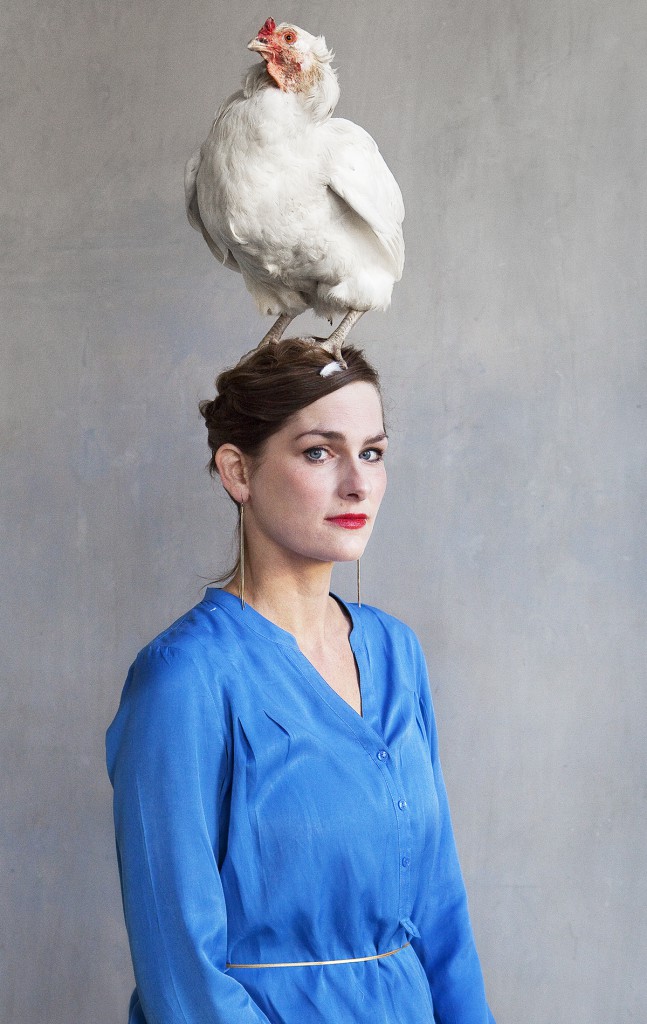
CV: Recently you contracted covid-19 and you lost your sense of olfaction. What did that do to you?
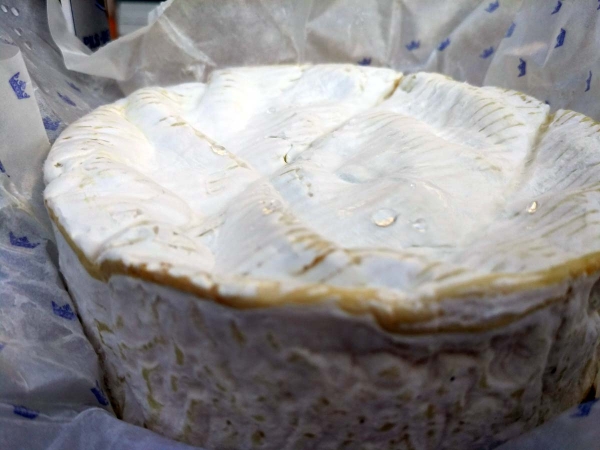
MV: It was one of the weirdest experiences! I received a gift, which was a hand cream and naturally I took a bit and smelled it. It appeared to have no scent at all while the packaging said it was ‘basil and mint scented’ hand creme. After that I took a tour around the house trying to smell something. Anything! I tried garlic-cream cheese, very old Camembert, all sorts of perfumes. The only thing I could faintly catch was a cheap scented candle with a very strong perfume. It was a peculiar experience to be in a kind of scent void. It felt as if I wasn’t really fully awake. I am very short sighted and in the morning before I put my contact lenses in my world seems blurry and cloudy. That’s how I felt without having the sense of olfaction. I have to note as well that I was ill so perhaps this amplified that experience.
CV: You mentioned the situation stimulated your creativity. You started to imagine scents. Can you give an example?
MV: The whole experience of anosmia triggered me a lot. I realised it was a unique experience, like fasting: when you do not eat everything is about food. Now everything was about scent in the absence of it. Next to that I wanted to actively train my olfactory abilities because, of course, I wanted to be able to smell again. I tried to imagine smells. In the shower I had an imaginary Coca Cola shower which worked very well. Some scents were very easy to imagine and it seemed to me that was because I had a kind of clean slate to work from. Eventually I didn’t smell a thing for just a few days but in these few days alone I drank spoiled milk without noticing it. I had to clean up puke which I decided was soup as I could just add an imaginary smell to it. I had to clean up poo which I knew I couldn’t smell but I noticed I was still holding my breath and feeling disgust as if I could smell it. As for taste: I could still taste in a very rudimentary way: sweet, sour, salty, bitter, umami but without the aroma. Incredibly boring. I tried to imagine aromas on top of the taste but that took quite a lot of energy.

CV: What happened after your anosmia turned into parosmia?
MV: involuntarily I started smelling kitchen smells, like baked potatoes and roasted meat. It made me go to the kitchen and see if I accidentally left the stove on. It wasn’t unpleasant but it was weird. My friend who had the same situation smelled ‘oliebollen’ (sic: Dutch greasy pastry) without reason. For a few days after I started smelling faintly again some things seemed out of tune with what I knew they were supposed to smell. As if pieces of a puzzle didn’t fit correctly. Fortunately this corrected itself rather quickly.

CV: Have your ideas about your artistic practice or even life in general changed now that you (luckily) retrieved your sense of smell?
MV: Yes it has made an impact. I am absolutely appreciative for having had this experience. I know about ansomia but it is really unimaginable for someone who can smell. Now having had the experience it is incredibly valuable to me and I value my olfactory sense even more.
I was already working on a joint project about using our imaginative abilities to create sensorial experiences without actually physically adressing the senses so it seemed as if this came just at the right time as a part of my research!
Keep on smelling
Watch my Tedx-talk “Inhaling the Past – Smelling the Future” (2016) here: https://www.youtube.com/watch?v=g37Qe8Kriuo
Listen to my interview with Manoush Zomorodi for Ted Radio Hour “Caro Verbeek: What CanThe Scents of The Past Tell Us About Our History?” (2021), Part 3 of Breathe, here: https://www.npr.org/2021/01/15/956933669/caro-verbeek-what-can-the-scents-of-the-past-tell-us-about-our-history
Or read our olfactory museology paper Verbeek, C., Leemans, I., Fleming, B. (2022), “How can scents enhance the impact of guided museum tours? towards an impact approach for olfactory museology”, Senses & Society, here: https://doi.org/10.1080/17458927.2022.2142012

 Futurist Scents